
The 20% Rule: How Much You Really Need to Change PLR Content to Make It Yours
If you have spent any time selling digital products, you have likely heard the advice to change your PLR before publishing. But nobody ever tells you exactly how much to change. The 20% rule gives you a clear, practical answer that experienced PLR sellers actually use.
The confusion around this question costs PLR sellers hours of unnecessary rewriting every week and leads many to either over-edit until the time savings disappear, or under-edit until their product looks identical to what thirty other sellers are already offering. Sellers of digital products who master this rule consistently outpace competitors who are guessing. This guide tells you exactly how to apply it.

What the 20% Rule Actually Means
The 20% rule is not a legal requirement, a platform guideline, or an official standard of any kind. It is a working framework built from the real experience of digital product sellers who have tested what level of customization actually produces a meaningfully different product in the eyes of buyers. The core insight is simple: a small percentage of any piece of content carries the overwhelming majority of its perceived voice, personality, and originality.
When experienced PLR sellers talk about the 20% rule, they are referring to the idea that roughly twenty percent of your content determines eighty percent of how original and branded it feels to readers. This is a direct application of the Pareto principle to content customization, and it holds remarkably well in practice. The twenty percent that matters most is not randomly scattered through the content — it lives in specific, identifiable locations that carry enormous weight in the reader's perception of voice and authenticity.
Understanding this allows you to stop approaching PLR customization as a line-by-line rewriting task and start treating it as a targeted editorial process. Whether you are working on a content marketing bundle, an email marketing sequence, or a full course — you are not rewriting the whole thing. You are surgically replacing the twenty percent that readers actually use to judge whether content feels real, authoritative, and worth their time.
Why Most PLR Sellers Get the Editing Amount Wrong
The majority of PLR sellers fall into one of two patterns when it comes to customization, and both patterns cost them money. The first is under-editing, where a seller makes superficial changes like swapping the title and adding a new cover image, then publishes content that buyers can find in nearly identical form across dozens of other shops. This creates a race to the bottom on price, kills brand authority, and results in the dreaded duplicate content problem across platforms.
The second pattern is over-editing, where a seller becomes so anxious about differentiation that they effectively rewrite the entire piece from scratch. This eliminates the core economic advantage of PLR, which is that the foundational research, structure, and expertise has already been done for you. If you are spending four hours customizing a PLR article that took you thirty minutes to acquire, you have lost the time leverage that makes PLR a viable business model.
The Five Locations Where the 20% Lives
Knowing the rule is useful. Knowing exactly where to apply it is what makes it work. The twenty percent that transforms a PLR piece into a branded product is concentrated in five specific locations, each with an outsized effect on how readers perceive voice and originality.
-
1
The Introduction
The first paragraph is where readers decide whether they are engaging with a real person or scrolling past generic content. A rewritten intro that opens with a specific scenario, a counterintuitive claim, or a direct question makes everything that follows feel authentic. If you only make one change, make it here.
-
2
The Conclusion and Call to Action
The last impression a reader takes away shapes everything about how they perceive the overall quality and value of what they just read. A strong, brand-consistent conclusion that reflects your philosophy and points toward your specific product is one of the most powerful differentiators between commodity PLR and a genuinely branded product.
-
3
The Subheadings
Readers scan subheadings before deciding whether to read at all. Generic subheadings like "Benefits of This Approach" communicate nothing distinctive. Rewriting subheadings to reflect your specific angle and your audience's actual language signals expertise and originality before a single body paragraph is read.
-
4
Your Own Examples and Observations
Every general statement in a PLR piece is an opportunity to insert a specific example drawn from your own experience or your audience's context. Replacing phrases like "many entrepreneurs struggle with" with a concrete, specific scenario your ideal buyer would recognize transforms the piece from educational content into expert guidance.
-
5
Formatting and Structure Choices
The way you choose to present information — adding a numbered list here, breaking a dense paragraph there, adding a callout box for a key insight — reflects your judgment about what your audience needs. These structural choices layer your editorial perspective onto the PLR foundation without requiring you to rewrite the underlying information.
What You Do Not Need to Change
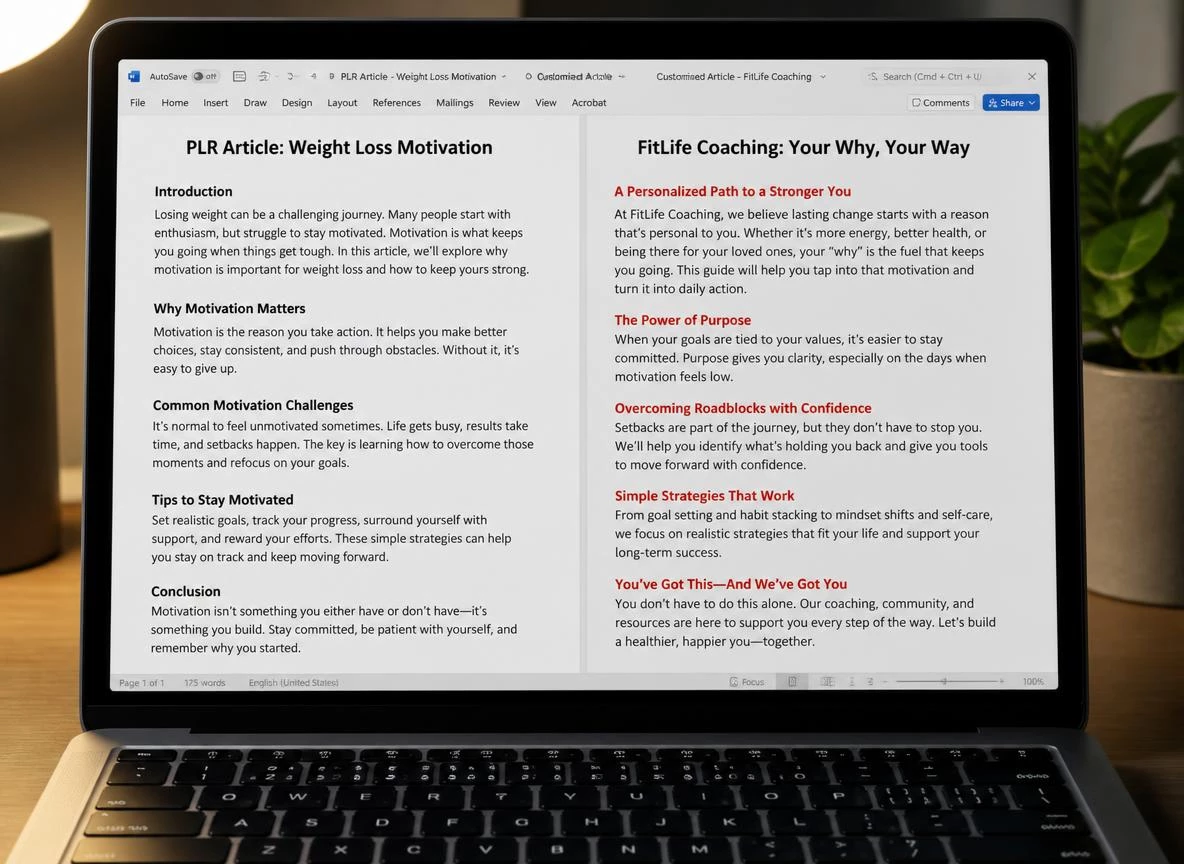
The power of the 20% rule is as much about what it tells you to skip as what it tells you to change. The body paragraphs that explain factual information, walk through processes, or describe concepts do not need to be rewritten sentence by sentence. Information itself is not subject to copyright protection. The PLR license you purchased already grants you the right to sell the content as your own — there is no legal or practical reason to paraphrase every factual sentence.
Step-by-step instructions, numbered processes, and procedural how-to sections can remain largely as written. Statistics, data points, and cited research can stay as written — if current and accurate, there is no value in changing them beyond verifying and linking to their original sources. Using AI tools to quickly verify and refresh outdated statistics is a worthwhile five-minute investment that genuinely improves the product.
The middle body paragraphs that explain concepts in plain language are the safest part of a PLR piece to leave largely unchanged. As long as your introduction, conclusion, subheadings, examples, and structural choices are genuinely yours, the explanatory body content can remain close to the original without undermining the product's distinctiveness.
Applying the 20% Rule to Different PLR Formats
The specific application changes slightly depending on the format of the PLR content you are working with. Understanding how to apply it across different formats is what makes the rule genuinely useful as a system rather than just a principle.
Ebooks and Guides
Rewrite chapter openings and closings, the final conclusion, and the about the author section. Add one original example per chapter. Adjust subheadings to reflect your framing.
Email Sequences
Rewrite every subject line, the opening sentence of each email, and the closing call to action. Leave the educational body content largely intact. These three elements account for your 20%.
Blog Posts and Articles
Rewrite the title using your own keyword research, rewrite the introduction and conclusion, add one specific example per section, and adjust any generic subheadings.
Social Media Packs
Rewrite every caption hook — these are the highest-leverage and most duplicated element. Add one niche-relevant detail per post and adjust calls to action to point to your own products.
For sellers building a social media presence around their PLR products, caption hooks and opening lines are where your 20% does the most work in the shortest number of words. For sellers focused on affiliate marketing blog content, the introduction and subheadings are the critical investment points.
A Practical Workflow for the 20% Rule
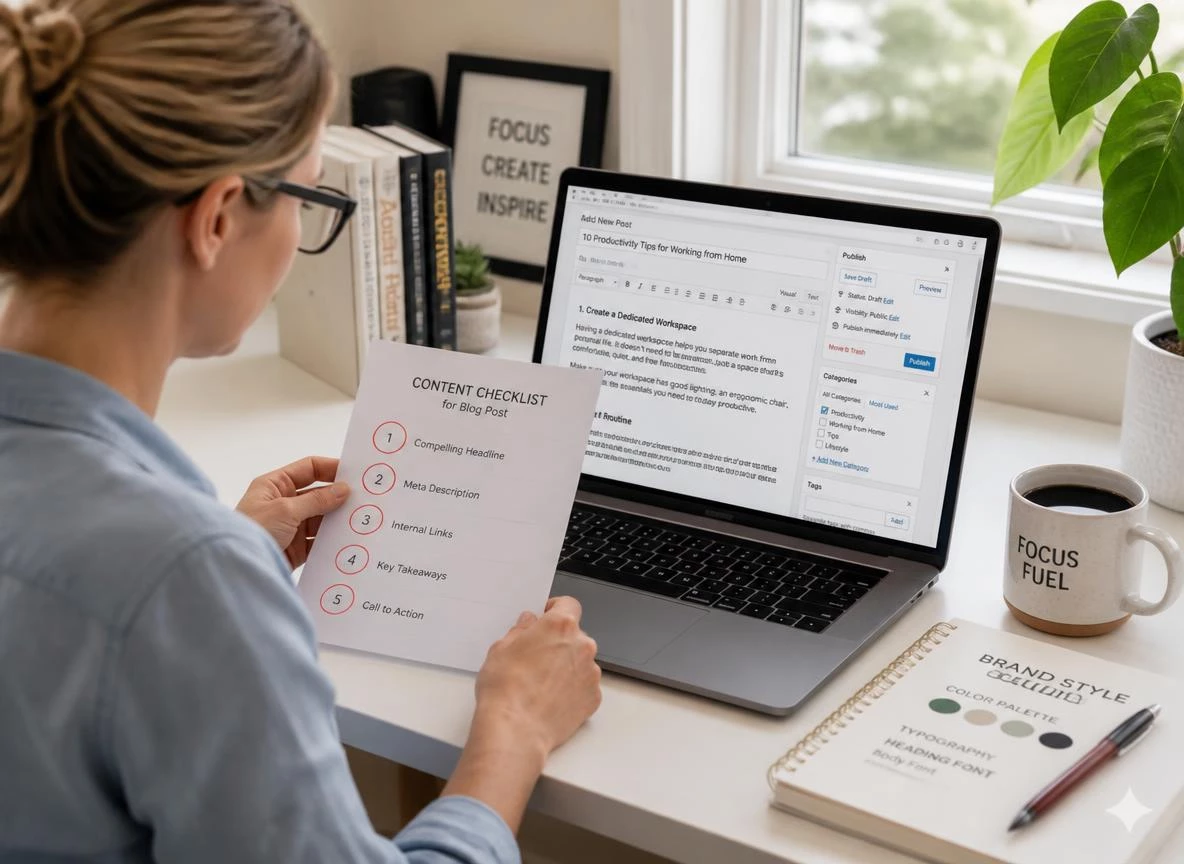
Applying the 20% rule consistently requires a workflow, not just an intention. Without a process, the editing task feels open-ended and sellers either rush through it or over-invest time they do not have. The following workflow gives you a repeatable process for applying the rule efficiently every time you work with PLR content.
- Read the complete piece once before making any changes to understand the structure, identify the high-leverage locations, and note where your own examples will fit naturally
- Begin with the introduction — write a completely original opening paragraph using your voice and a hook designed for your target audience, without referencing the original
- Move to the subheadings and rewrite any that feel generic, obvious, or interchangeable with subheadings on any other article about the same topic
- Work through the body adding one specific example, observation, or detail per section — keep a swipe file of your own examples and case studies to draw from quickly
- Write a completely original conclusion and call to action — know your specific product, your audience, and the specific action you want readers to take
- Read the customized piece aloud — your ear will catch generic phrases your eyes skip
This workflow consistently produces a meaningfully differentiated PLR product and generates the kind of passive income compounding that comes from having a recognizable, trusted brand rather than a collection of generic listings competing on price.
Practical Tips for Applying the 20% Rule
- Reserve your creative energy for the introduction and conclusion — these two elements have more impact on buyer perception than any other part of the content
- Keep a running document of three to five phrases that characterize your brand voice so you can consciously apply them when rewriting introductions and conclusions
- Build a personal swipe file of examples and case studies organized by topic so you always have relevant material to insert during the body editing step
- Set a time limit for each piece you customize to prevent over-editing from eroding your efficiency advantage
- Batch your customization work by processing multiple pieces in a single session to maintain momentum and consistency
- Read your introduction and conclusion aloud before considering any piece finished
- Update any statistics or data points that are more than eighteen months old before publishing
- Adjust every call to action to point toward your specific product rather than leaving generic calls to action from the original PLR intact
Your 20% Is What Makes the Product Yours
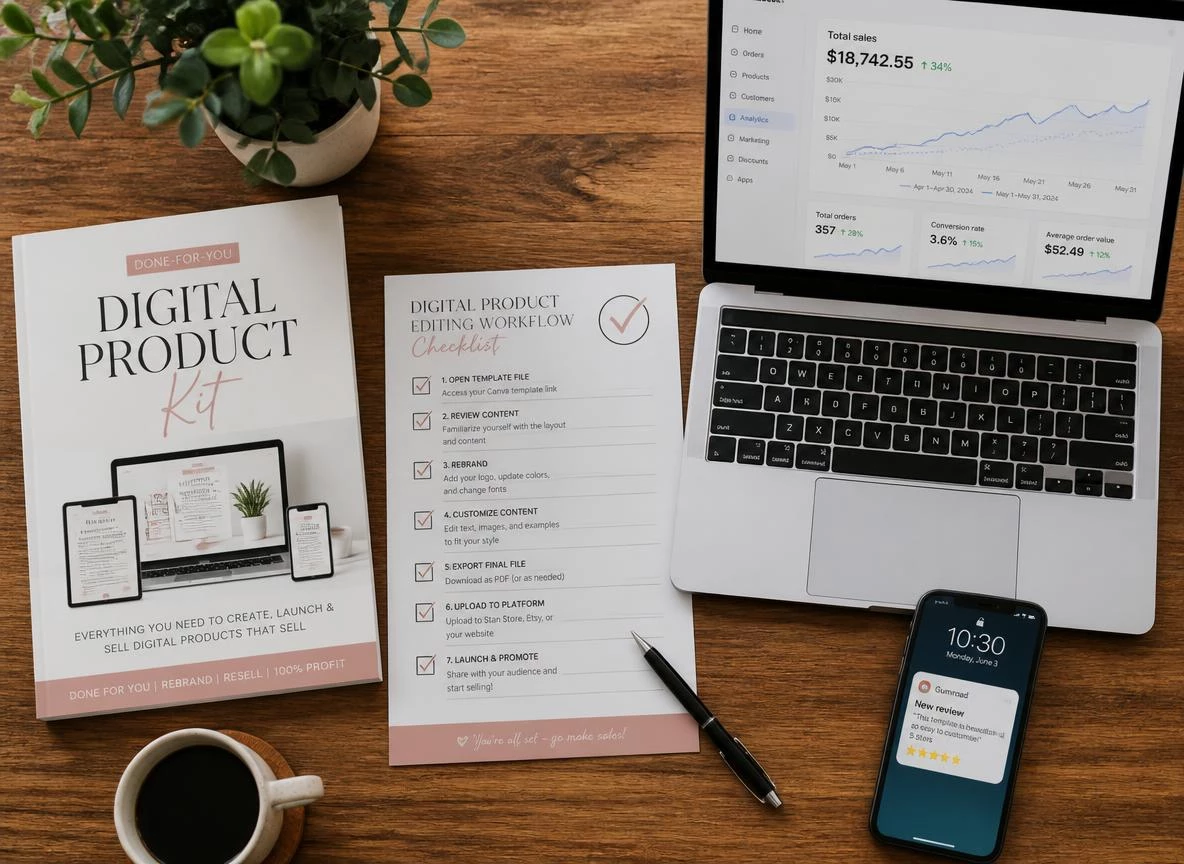
The 20% rule gives you permission to stop rewriting everything and start investing your energy where it matters. Your buyers will experience the introduction you wrote, the examples you chose, the subheadings you crafted, and the conclusion you directed toward them. Start with your next PLR piece, apply the rule deliberately, and see how much faster you work and how much more distinctively your brand comes through.
Browse PLR Products to Start Customizing →
Leave A Reply