
AI-Proof Your Digital Products: What Actually Sells in 2026
Every digital product seller has felt the same low-grade anxiety at some point in the last couple of years. You open a chatbot, type in a rough version of what you sell, and watch it spit out something uncomfortably close to your product in under a minute. If a machine can do that for free, why would anyone still pay you for it.
Here's the thing nobody talks about enough. Some digital products are quietly disappearing right now, while others are selling better than ever, sometimes to the exact same audience. The difference isn't whether AI exists. It's whether the product ever had anything AI couldn't trivially reproduce in the first place. In 2026, the sellers who are thriving figured this out early and rebuilt around it. This guide breaks down exactly what's still selling, what's fading fast, and how to move your own catalog to the right side of that line.

The Products AI Actually Threatens
Let's start with an honest look at what's actually vulnerable, because vague AI anxiety helps nobody. The products losing ground are the ones that were always just information delivery with no packaging around them. A plain PDF listing generic tips on a topic. A static checklist with no context for why each item matters. A basic template with no explanation of how or when to use it.
These products were never really about expertise. They were about access to information that used to be time-consuming to compile. AI collapsed that time cost to almost nothing, so a product whose entire value proposition was "I gathered this information so you don't have to" no longer has much of a value proposition at all.
The same is true for anything that reads like it could have been generated by a prompt, because increasingly, buyers can tell. A guide with no specific examples, no distinct voice, and no evidence that a real person tested or lived through what it describes feels interchangeable with free AI output, even if a human technically wrote it. That resemblance alone is often enough to kill a sale before it happens.
What AI-Proof Actually Means
AI-proofing your products doesn't mean avoiding AI tools or pretending the technology doesn't exist. It means building products around things AI genuinely struggles to replicate at the same level of trust, specificity, and usefulness. That's a narrower category than most sellers assume, but it's also more achievable than most sellers realize.
AI is excellent at producing plausible-sounding general information quickly. It is much weaker at producing content grounded in a specific person's lived experience, a specific community's shared context, or a specific creator's track record of results. Those are the raw materials of an AI-proof product, and every seller already has access to some version of them, whether or not they've been using them.
The goal isn't to make your product "AI-resistant" in some technical sense. It's to make it the kind of thing a buyer would rather pay for than attempt to recreate themselves with a free tool, because the value isn't just the words on the page. It's the judgment, access, or proof behind those words.

Real Experience and Original Data Still Sell
Nothing signals authenticity faster than specificity that couldn't have come from anywhere else. A product built around your own case studies, your own before-and-after results, or your own client outcomes carries a kind of proof that generic content simply cannot fake. Buyers aren't just paying for information anymore. They're paying for evidence that the information actually works.
This is why products built around original data consistently outperform products built around recycled advice. If you've run an experiment, tracked a result over time, or surveyed your own audience, that data is uniquely yours. No AI tool can generate it, because it doesn't exist anywhere else for the model to learn from or reproduce.
Community and Access Are Becoming the Real Product
One of the clearest shifts happening right now is that the product itself is becoming less important than what surrounds it. A course with a private community attached sells differently than the exact same course sold alone, because the community offers something no AI model can replicate: real-time access to other humans working through the same problem, plus access to you.
Live components matter more than they used to for this exact reason. A cohort-based program, a monthly live Q&A, or even a simple group chat where buyers can ask questions and get a real answer changes the entire value proposition. The content might be similar to what's available elsewhere, but the access isn't, and access is far harder for AI to substitute.
This doesn't mean every digital product needs a full community built around it. But even small additions, like a limited-time bonus call, a comment thread where you personally respond, or a way for buyers to reach you directly, add a layer of human connection that static content alone can't provide. That layer is increasingly what buyers are actually paying for.
Interactive and Multimedia Formats Are Outperforming Static Files
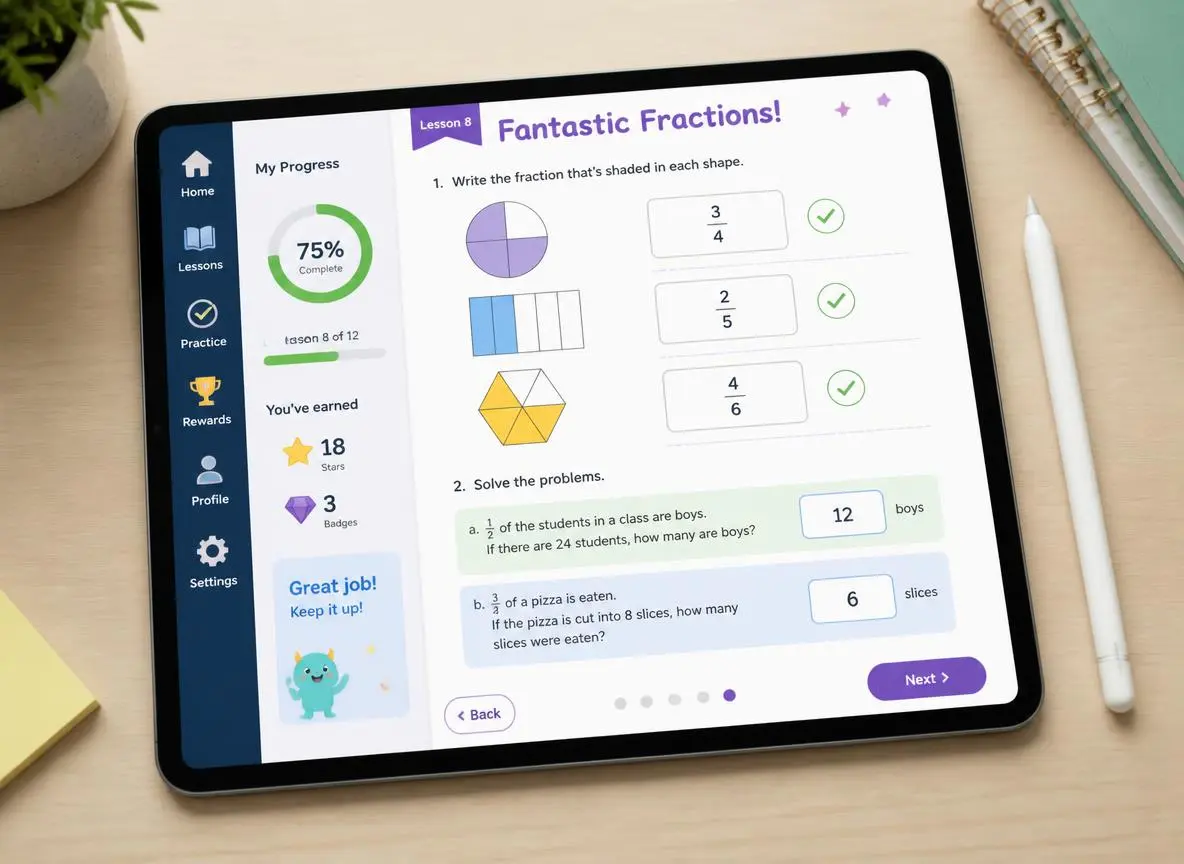
A plain text document is the easiest possible format for AI to compete against, because AI is fundamentally a text generation tool. The further your product moves from "static block of text" toward something interactive, visual, or personalized, the harder it becomes for a buyer to simply recreate it themselves in a chat window.
Video content still carries weight that AI-generated text can't easily match, especially when it shows your face, your voice, and your specific way of explaining things. Interactive tools, like a calculator, a self-assessment quiz, or a tracker that adjusts based on the buyer's input, offer functional value that a static file never could, since the product is doing something rather than just describing something.
Even simple upgrades matter here. A workbook with fillable digital fields feels more valuable than a workbook meant to be printed and filled in by hand. A template built inside an actual tool the buyer already uses feels more valuable than a template described in a PDF. These format choices signal effort and usability in ways that plain text cannot.
Personal Brand and Voice Are a Genuine Moat
Anonymous, faceless content has always been easier to compete against than content tied to a specific, recognizable person, and that gap has only widened. When a product carries your name, your story, and your specific perspective, buyers aren't just evaluating the content. They're evaluating you, and that's not something AI can generate on your behalf.
This is part of why creators with an established audience and a consistent voice are weathering the AI shift far better than anonymous sellers pushing interchangeable products. Their audience isn't just buying information, they're buying a continuation of a relationship they already trust. That relationship took time to build, and it's precisely the kind of asset that resists quick replication.
If you don't currently have a strong personal brand attached to your products, this is worth building deliberately rather than treating as optional. Even small additions, like a short video introduction, a personal story woven into your sales page, or consistent branding that ties your products together, start to build the kind of recognition that makes a buyer choose you specifically instead of whatever a chatbot could produce.
Done-For-You and Higher-Touch Tiers Are Growing
As pure information becomes commoditized, more buyers are willing to pay a premium to skip the implementation step entirely. This is showing up as a genuine growth area across digital product categories: offering a done-for-you or higher-touch version of what used to be a purely self-serve product.
Instead of just selling a template, some sellers now offer a version where they customize it for the buyer directly. Instead of just selling a course, some offer a limited number of one-on-one implementation sessions as an upgrade. These aren't just upsells for extra revenue, they're a direct response to the fact that information alone has become cheap, while expert judgment and hands-on help have not.
This tiered approach also protects your lower-priced offers. A basic digital product can still sell well as an entry point, while the higher-touch tier captures buyers who want more certainty, more customization, or simply don't want to do the implementation work themselves. That structure gives you AI-resistant revenue at the top of your funnel even if your entry-level product faces more price pressure over time.
Practical Ways to AI-Proof Your Digital Product Line
- Audit your current products and flag anything that reads as generic information with no personal experience, data, or voice behind it
- Add at least one piece of original data, case study, or first-person result to every core product in your lineup
- Layer a community or access component onto your best-selling product, even something as simple as a monthly live session
- Convert at least one static PDF-based product into an interactive or video-based format this quarter
- Build a short personal introduction into every sales page so buyers know exactly who they're buying from
- Test a higher-touch, done-for-you tier on your most popular product to capture buyers willing to pay for implementation help
None of these changes need to happen all at once. Even tackling one product at a time steadily shifts your entire catalog away from the category AI is actively eating into and toward the category that continues to command real prices.

Building Products AI Can't Simply Replicate
The panic around AI replacing digital products has always been slightly misdirected. What continues to sell in 2026 is exactly what has always mattered most: real experience, real access, real judgment, and a real human relationship between creator and buyer. Start moving your catalog toward the products only you could offer.
Explore PLR Bundles to Build On →
Leave A Reply