
Best Platforms To Sell PLR and MRR Digital Products in 2026
Once you have your PLR or MRR products ready to sell, the next decision is just as important as the products themselves. Where you sell determines who finds your products, how much you keep from each sale, and how quickly you can start generating income.
The digital product landscape in 2026 includes more platform options than ever before, each with distinct advantages depending on your goals, your budget, and your current stage as a seller. This guide walks through the best platforms for selling PLR and MRR digital products in 2026, what makes each one stand out, and how to decide which platforms deserve a place in your digital product business.

Why Platform Choice Matters More Than Most Sellers Realize
Many new PLR and MRR sellers focus almost entirely on their products and treat platform choice as an afterthought. This is a mistake that costs sellers significant revenue every month. The platform you choose shapes your discoverability, your fee structure, your ability to build a customer relationship, and ultimately the passive income potential of your business.
Different platforms also attract different types of buyers. A buyer browsing Etsy is often in an active purchase mindset looking for a specific solution. A buyer on Gumroad might be following a creator they already trust. A buyer arriving at your own store through a social media link is responding to your marketing directly. Understanding these different buyer mindsets helps you match your products and your messaging to the platform where they will perform best.
The most successful PLR and MRR sellers in 2026 rarely rely on a single platform. They build a presence across multiple platforms strategically, using each one for what it does best, while gradually building owned assets like an email list and a branded store that reduce their dependence on any single marketplace over time.
Etsy: The Marketplace Giant for Digital Downloads
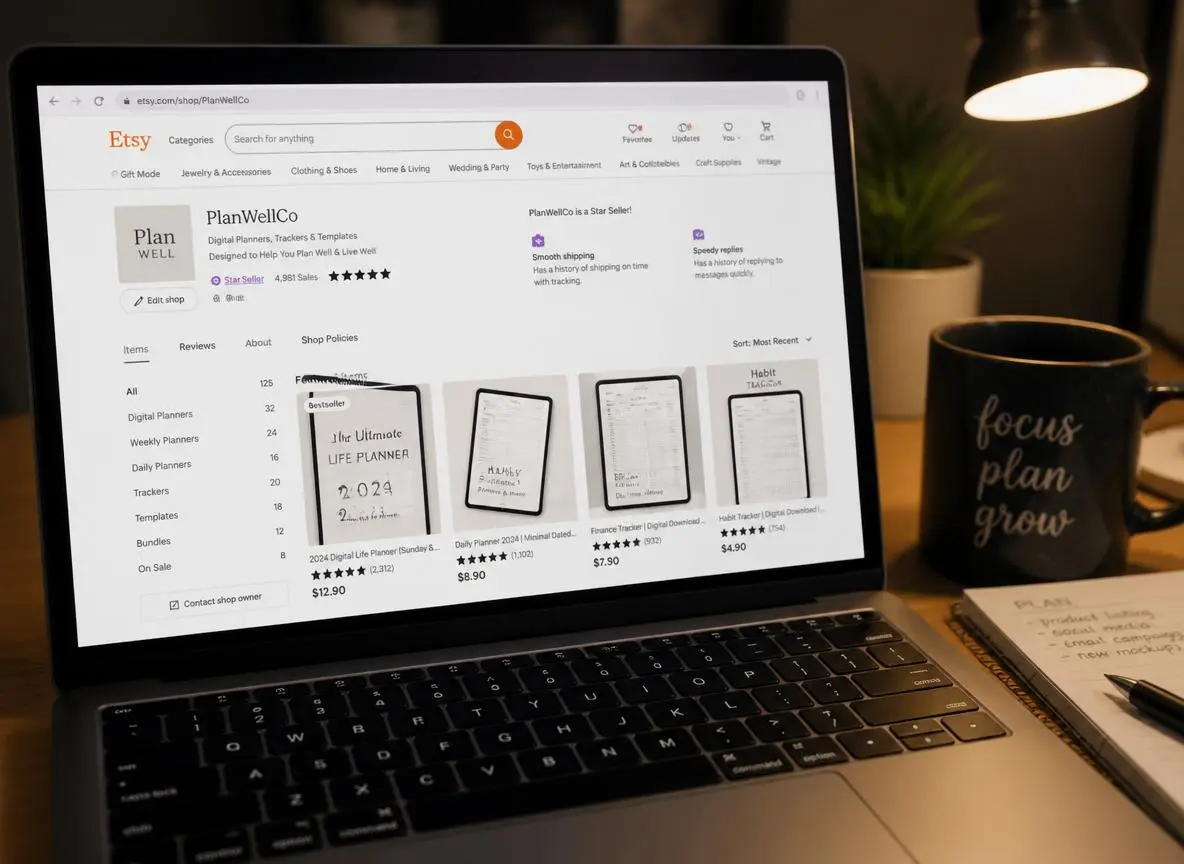
Etsy remains one of the largest and most accessible platforms for selling PLR and MRR digital products in 2026. With its massive built-in audience actively searching for templates, ebooks, planners, and courses, Etsy continues to be the easiest place for new sellers to get their first sales without any existing following.
The biggest advantage of Etsy is organic discovery. Etsy's search algorithm and category browsing put your products in front of buyers who are already searching for solutions in your niche. This makes Etsy particularly valuable for testing new product ideas and validating demand before investing heavily in a broader marketing strategy.
Sellers succeed on Etsy by focusing on strong visual presentation, optimized tags and titles, and consistent review accumulation to stand out in crowded categories.
Gumroad: The Creator-Friendly Direct Sales Platform
Gumroad has built a strong reputation among digital creators for its simplicity and creator-first approach. Unlike a marketplace, Gumroad functions more like a direct sales tool that integrates with your existing audience, whether that audience comes from social media, email, or a personal brand.
The biggest advantage of Gumroad is the combination of low setup friction and direct customer ownership. You can have a product live and selling within minutes, and unlike Etsy, you retain access to your customer data and can build an email list directly through your sales. Gumroad also has a built-in discovery feature that can occasionally drive organic traffic, though this is far less significant than Etsy's search traffic.
Gumroad works best for sellers who already have some audience, whether through social media, a newsletter, or a YouTube channel, and want a frictionless way to monetize that audience with PLR or MRR products.
Shopify: The Branded Storefront for Serious Sellers
Shopify represents the platform of choice for PLR and MRR sellers ready to build a genuine, scalable brand. Unlike marketplaces, Shopify gives you a fully independent store on your own domain with complete control over design, branding, and the customer experience from browsing to checkout to post-purchase follow-up.
The biggest advantage of Shopify is ownership. Every customer relationship belongs to you. You can build email lists, create retargeting campaigns, and develop a cohesive brand identity that commands premium pricing in a way that crowded marketplace listings rarely allow. For PLR and MRR sellers building a catalog of related products, Shopify's ability to support upsells, cross-sells, and bundle offers is unmatched.
The tradeoff is that Shopify provides zero built-in traffic. Every visitor must be driven through your own marketing efforts, whether that is paid advertising, content marketing, social media, or email campaigns. This makes Shopify best suited for sellers who have validated their products elsewhere and are ready to invest in building their own audience.

Specialized PLR and MRR Marketplaces
Beyond the major general-purpose platforms, 2026 has seen continued growth in marketplaces built specifically for PLR and MRR products. These platforms cater to buyers who are specifically looking for resell rights products, white label content, and reseller-friendly digital goods.
The advantage of these specialized marketplaces is audience alignment. Buyers browsing these platforms already understand what PLR and MRR mean and are specifically looking for products they can customize, rebrand, and resell. This eliminates much of the educational friction that exists when selling PLR products on general marketplaces where buyers may not understand resale rights at all.
The tradeoff is that these marketplaces typically have smaller overall traffic compared to giants like Etsy, and the buyer base often consists of other sellers rather than end consumers. This makes specialized PLR marketplaces particularly valuable for selling MRR products in bulk to other resellers, while general marketplaces remain better for selling finished, rebranded products to end consumers.
Social Commerce and Direct Sales Through Content Platforms
An increasingly important channel in 2026 is social commerce, where creators sell digital products directly through links embedded in social media content on platforms like TikTok, Instagram, and Pinterest. Many of these platforms now offer native shopping features that allow creators to tag products directly in posts and videos.
The advantage of social commerce is that it meets buyers where they are already spending time, removing the friction of navigating to a separate marketplace or store. Short-form video content showcasing a PLR product transformation or a quick tutorial using a template can drive impulse purchases directly through the platform's native checkout or a linked storefront.
How to Choose the Right Platforms for Your PLR Business
Choosing the right combination of platforms depends on your current stage as a seller, your existing audience, and your long-term goals.
Brand New, No Audience
Start with Etsy to access built-in traffic and validate your product ideas quickly with minimal setup cost.
Existing Audience
Add Gumroad to monetize social media or email audiences directly with full customer data ownership.
Validated Demand
Invest in Shopify and drive traffic through content marketing, paid ads, and email campaigns.
Selling MRR Specifically
List on specialized PLR and MRR marketplaces to reach buyers actively seeking resale rights products.
Use social commerce on TikTok, Instagram, and Pinterest as a traffic layer that drives buyers to whichever platform represents your primary sales channel. Building this around a strong affiliate marketing approach can multiply your reach without additional ad spend.
Practical Tips for Selling Across Multiple Platforms
- Maintain consistent branding across every platform so buyers recognize your products regardless of where they encounter them
- Use platform-specific optimization such as Etsy tags, Gumroad discovery settings, and Shopify SEO to maximize each channel's strengths
- Build your email list from every platform where possible to reduce long-term dependence on any single marketplace
- Track which platform generates the highest profit per sale, not just the highest sales volume, when deciding where to focus
- Repurpose product descriptions and images across platforms but adjust formatting and tone to match each platform's audience expectations
- Start with one or two platforms and expand only once you have systems in place to manage inventory and customer support across channels
- Monitor platform policy changes regularly since marketplace fee structures and algorithms can shift and affect your revenue

Choose Your Platforms and Start Selling Today
The best platform for selling PLR and MRR products in 2026 is rarely a single platform — it is a strategic combination that matches your products, your audience, and your growth stage. Start where you are, choose the platforms that match your current resources, and build the income foundation your business deserves.
Browse PLR and MRR Products →
Leave A Reply