
The Copy-Paste Trap: Why Unedited PLR Never Sells (And How to Escape It)
There is a moment that almost every new PLR seller experiences somewhere between their first purchase and their first month of disappointing results. The sales that were supposed to arrive did not come. What went wrong is not complicated — but it is not what most PLR sellers expect. They fell into the copy-paste trap, and they had no idea it existed until they were already stuck in it.
The copy-paste trap is not a niche problem or a platform problem. It is a digital products problem that affects sellers at every stage — and the path out of it is the same path toward building genuine passive income from a product catalog that compounds over time.

What the Copy-Paste Trap Actually Is
The copy-paste trap is the pattern of purchasing PLR content and publishing it in essentially the same state it was received — with minimal or superficial modifications — and expecting market demand to do the work that differentiation should be doing. It is one of the most common mistakes in the digital product space and one of the most expensive, not because it results in legal consequences, but because it results in invisibility.
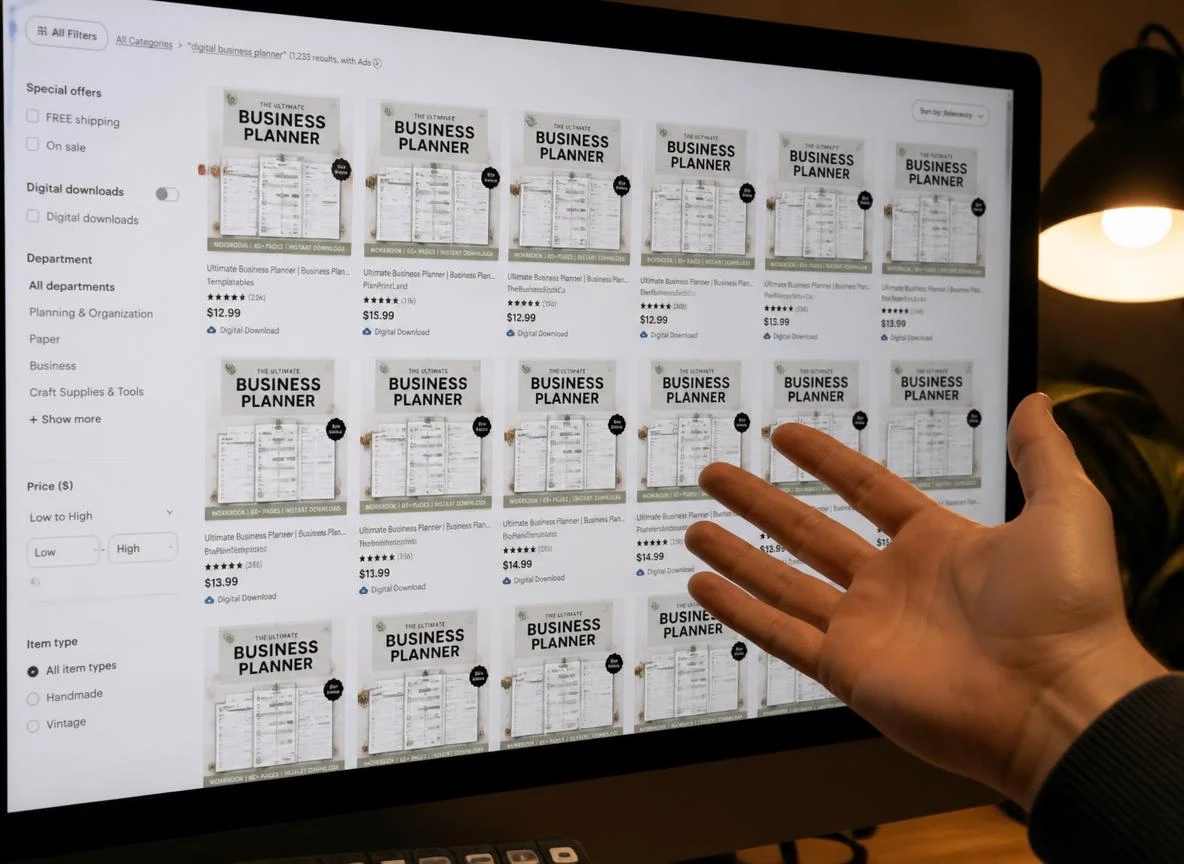
The trap has two components that work together to kill sales. The first is market saturation at the listing level. When multiple sellers purchase the same PLR pack and publish it with similar titles, similar cover designs, and similar descriptions, buyers encounter what looks like a commodity. Commodities compete only on price, and price competition in content marketing products is a race to the bottom that benefits nobody. The second component is the absence of any trust signal that distinguishes one seller's version from another.
The copy-paste trap is particularly insidious because it feels like a reasonable shortcut. PLR is supposed to save you time. Uploading it quickly feels like efficiency. The trap closes when sellers discover that the time saved in production is lost in the form of products that sit in their shop generating zero revenue indefinitely.
Why Buyers Can Always Tell
One of the most persistent myths in the PLR selling space is that buyers cannot tell the difference between a product that has been genuinely customised and one that has simply been repackaged. This myth is wrong. Buyers cannot necessarily articulate what they are sensing, but they experience something immediate: the product does not feel like it was made for them.
Trust in digital products operates through recognition. When a buyer reads product copy that accurately describes their specific frustration, names the exact obstacle they face, and promises a solution designed for their context, they experience a recognition response that converts browsers into buyers. Generic PLR produces none of it because it was written without any specific buyer in mind. Use AI tools to help quickly identify and replace those generic passages with niche-specific language that does create that recognition.
The Saturation Problem Nobody Talks About
Beyond the individual listing level, the copy-paste trap creates a systemic problem across the PLR marketplace. When a significant number of sellers purchase the same PLR pack and publish it with minimal modification, search results on any platform become flooded with visually and semantically similar listings. The unedited PLR listings form a visual noise floor that trained buyer attention learns to ignore.
The saturation problem also affects external search rankings. When multiple listings share similar titles, descriptions, and product content, algorithms have difficulty distinguishing between them and typically favour listings with the most purchase history and reviews. A new seller publishing unedited PLR competes not just against other new sellers but against established sellers who have accumulated the social proof metrics that influence algorithmic placement. Your social media promotion and affiliate marketing efforts can drive traffic — but without differentiation, none of it converts.
The Five Specific Ways Copy-Paste PLR Signals Generic
Understanding exactly what buyers are responding to when they sense generic content helps sellers know precisely where to invest their customisation effort.
-
1
Universally Framed Introduction
Statements like "many people struggle with this topic" are so broad they apply to everyone and connect with no one. If a stranger could have written your opening paragraph, it needs rewriting.
-
2
Example-Free Claims
Generic PLR makes assertions without grounding them in specific scenarios. Claims without concrete, niche-specific examples cannot be believed by any real buyer in any real situation.
-
3
Flat Tonal Register
Generic PLR avoids strong opinions, humour, and any perspective that might narrow its appeal. The result is content nobody finds objectionable and nobody finds memorable.
-
4
Mismatched Call to Action
When the CTA does not match the seller's actual product ecosystem or brand voice, it signals that the content was produced elsewhere and dropped into this listing without meaningful integration.
-
5
Visual Inconsistency Between Cover and Interior
When a buyer opens a product and discovers the interior does not match the quality implied by the cover, the trust that the cover built is immediately and irreparably damaged.

How to Escape the Copy-Paste Trap Permanently
Escaping the copy-paste trap does not require rewriting every word of every PLR product you sell. It requires investing your customisation effort in the right places consistently enough that your products accumulate the trust signals that generic PLR lacks. The most efficient escape route is to develop a customisation framework that you apply to every PLR product before publication.
The 5-Component PLR Customisation Framework
- A new title that names a specific outcome for a specific audience rather than describing a topic
- A completely rewritten introduction that opens with a specific scenario your target buyer would recognise
- At least one specific example per major section that replaces or supplements any generic examples in the original
- A designed interior layout that matches the visual quality of your cover
- A call to action that points specifically to your product ecosystem, your email marketing list, or your next relevant offering
Applying this framework consistently does not just improve individual product performance. It builds a recognisable brand aesthetic across your catalog that makes each new product easier to sell than the last. Buyers who purchased one of your products and found it genuinely valuable are predisposed to trust your next product without the scrutiny they would apply to a first encounter.
What Customisation Looks Like in Practice
Take a generic PLR ebook titled "Complete Guide to Email Marketing." The original introduction reads something like: "email marketing is one of the most effective digital marketing strategies available today, with an average return on investment of forty-two dollars for every dollar spent." This introduction is technically accurate and entirely forgettable.
A customised version for a seller targeting freelance writers might read: "If you have been sending newsletters to a list of forty people and wondering whether it is even worth continuing, you are not at the beginning of a failure. You are at the exact point where every successful freelance writer's email strategy started. The difference between the lists that grow and the ones that stagnate has almost nothing to do with writing quality and almost everything to do with three structural decisions most newsletter guides never mention."
The second version says nothing factually more accurate than the first. But it creates a specific recognition response in a specific reader. It names a specific situation, challenges a specific assumption, and promises insight the reader has not encountered in the dozens of generic guides they have already scrolled past. That is not a minor upgrade — that is the difference between a product that sells and a product that sits. Build this skill and apply it consistently, and your PLR catalog becomes an asset that compounds rather than a collection of invisible listings.
Practical Tips for Breaking Out of the Copy-Paste Trap
- Always rewrite the introduction and conclusion of every PLR product before publication, even if you change nothing else
- Replace at least two generic examples per chapter with specific scenarios drawn from your target niche's actual vocabulary and experience
- Redesign the interior layout using Canva to match the visual quality of your cover before uploading
- Write a product title that names a specific audience and a specific outcome rather than describing a topic
- Read your product description aloud before publishing and ask whether a stranger would know exactly who it is for
- Develop a swipe file of your own experiences, observations, and case studies that you can insert into PLR products quickly
- Set a minimum customisation time for each product, even if that minimum is only ninety minutes
- Build your email list from every PLR product sale so repeat purchases require less trust-building than initial ones
- Test two different title framings for the same product to identify which specificity level resonates most with your audience
- Review your lowest-performing listings and identify which of the five generic signals they are displaying before attempting to optimise them
The Exit Is Always Available
The copy-paste trap is not a permanent condition. The investment required to escape it is modest in time and zero in additional cost — a commitment to treating your PLR content as the starting point it is designed to be rather than the finished product it is too often mistaken for. Make that shift once, build it into your process, and the copy-paste trap stops being a risk you face and starts being a mistake your competitors are still making.
Browse PLR Products to Transform →
Leave A Reply