
Etsy vs Shopify for PLR Sellers: Which Platform Wins in 2026?
If you are serious about selling PLR digital products online, the platform you choose is one of the most consequential decisions you will make. It determines how many people find your products, how much of each sale you keep, and how scalable your business becomes.
Both Etsy and Shopify have passionate advocates in the PLR seller community, and both can absolutely generate meaningful income. But they work in fundamentally different ways and suit fundamentally different types of sellers. This guide gives you a clear, honest comparison of both platforms across every factor that matters to PLR sellers in 2026 — so you can make the right choice for your goals and start building real passive income from your digital products.
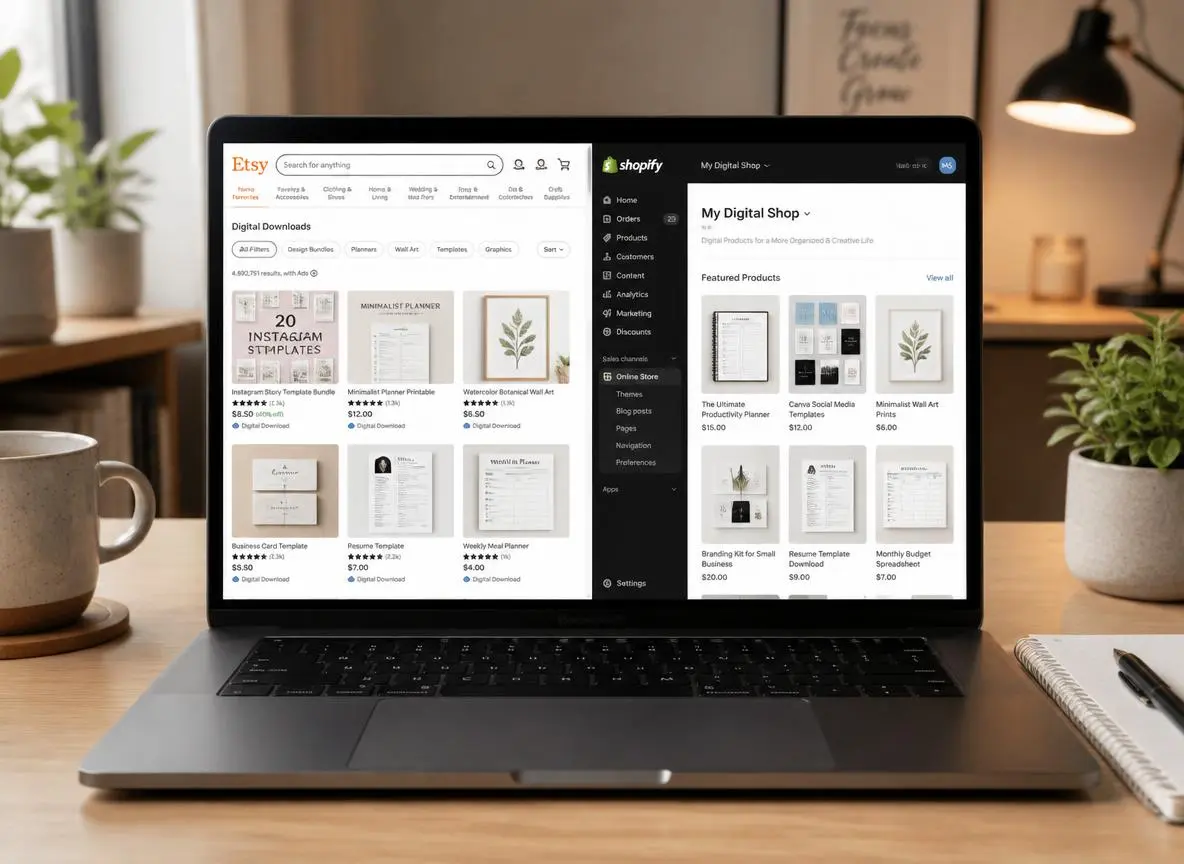
Understanding the Fundamental Difference Between Etsy and Shopify
Before getting into specific comparison points, it helps to understand what each platform fundamentally is.
Etsy — Marketplace
- You sell inside Etsy's existing ecosystem
- 90M+ active buyers already on the platform
- Built-in search engine surfaces your products
- Buyers discover you through Etsy — not your marketing
- Less brand control, more organic reach
Shopify — Standalone Store
- You build your own independent store
- Zero built-in traffic — you drive every visitor
- Complete control over design and branding
- You own every customer relationship fully
- More control, requires your own marketing
The fundamental choice is really between built-in traffic with less control versus complete control with no built-in traffic. Understanding this distinction makes every other comparison point fall into place.
Why Etsy Is Great for PLR Sellers
Etsy's biggest advantage for PLR sellers is its existing buyer base. With over ninety million active buyers in 2026, Etsy has an enormous pool of shoppers who are already on the platform searching for digital products — ebooks, templates, planners, PLR courses, and guides. The organic discovery that Etsy provides is genuinely valuable, meaning new sellers can start generating sales from their very first listing without any social media following, email list, or advertising budget.
Etsy also has a well-established trust factor that benefits new sellers significantly. When someone buys on Etsy they are using a familiar platform with buyer protections, reviews, and a checkout process they already trust. That trust transfers to you as a seller even if your shop has zero existing reviews. Buyers on Etsy are in a purchase mindset in a way that cold traffic from social media rarely is.
The lower barrier to entry is also attractive for sellers just starting out. You can set up a complete Etsy shop in a few hours, upload your first PLR product, and technically be open for business with minimal technical knowledge and no upfront platform cost.
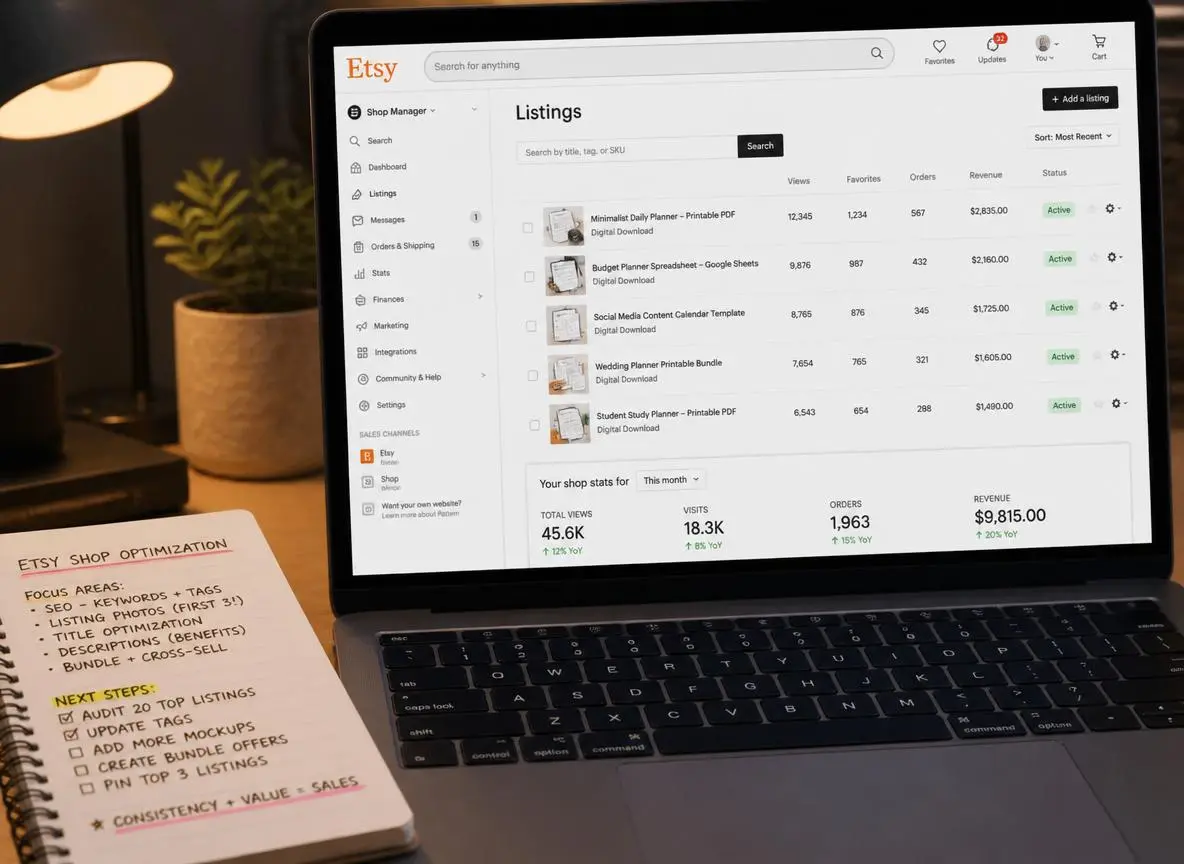
The Downsides of Etsy for PLR Sellers
The competitive landscape on Etsy has intensified dramatically in 2026. The PLR and digital product niche is crowded and in many categories you will find hundreds or thousands of nearly identical listings competing for the same search terms. For sellers offering MRR products in particular, the saturation problem is severe because multiple sellers are literally offering the same product. Standing out requires exceptional photography, optimized titles and tags, and consistent review accumulation.
Etsy's fee structure also erodes margins more than many sellers anticipate. Between the listing fee, transaction fee, payment processing fee, and Etsy's optional but algorithmically influential offsite ads program, sellers in some categories are losing twenty to thirty percent of their revenue to platform fees. A strong content marketing strategy that drives external traffic to your Etsy shop is one way to reduce dependence on Etsy's fee-heavy ad system.
Perhaps most critically, Etsy owns the customer relationship. When someone buys from your Etsy shop, they are Etsy's customer first and yours second. Etsy does not give you access to buyer email addresses for marketing purposes. You cannot follow up with past customers, build a retargeting audience, or create a loyalty program. Every customer you win on Etsy is a one-time transaction unless they choose to return specifically.
Why Shopify Is Powerful for PLR Sellers
Shopify's greatest advantage for PLR sellers is ownership. When you sell on Shopify, every customer relationship belongs to you. You collect email addresses, build retargeting lists, control the post-purchase experience, and can market to past buyers as often as you choose. A customer who buys one PLR ebook from your Shopify store can receive an email marketing follow-up the following week about your new course, template pack, or premium bundle — driving repeat purchases on autopilot.
Shopify also gives you complete control over your brand presentation. Your store looks exactly the way you want it to look. Your product pages reflect your brand voice. There are no competing products from other sellers appearing alongside yours. This brand control is what allows Shopify PLR sellers to build genuine brand recognition and charge premium prices that a crowded Etsy listing rarely supports.
The fee structure on Shopify is also more predictable and often more favorable at scale. You pay a flat monthly subscription fee regardless of how many products you sell. At high sales volumes, Shopify's transaction fees are typically lower than Etsy's combined fee structure, making it the more profitable platform per transaction once you reach consistent volume.

The Disadvantages of Shopify for PLR Sellers
Shopify's most significant disadvantage is that it comes with zero built-in traffic. Nobody stumbles onto your Shopify store by browsing a marketplace. Every single visitor must be actively driven to your store through marketing efforts — paid ads, affiliate marketing, social media content, or SEO. For a brand new PLR seller with no existing audience, this is a genuinely high barrier to entry.
The learning curve on Shopify is also steeper than Etsy. Setting up a professional Shopify store with a clean design, digital product delivery automation, email marketing integration, and analytics tracking requires more technical knowledge and time investment. Apps that simplify this process often come with additional monthly fees that add to your overhead.
For sellers who are testing new product niches or want to validate demand before investing heavily in a brand, Shopify's lack of built-in discovery is a real disadvantage. Etsy lets you test market demand quickly and cheaply. Shopify requires you to build the marketing infrastructure before you even know whether your product will sell.
Etsy vs Shopify: Full Comparison for PLR Sellers
| Factor | Etsy | Shopify |
|---|---|---|
| Built-in traffic | ✓ 90M+ active buyers | None — you drive all traffic |
| Ease of setup | ✓ Hours, minimal technical skill | Days, moderate technical setup |
| Brand control | Limited — Etsy's branding dominates | ✓ Complete ownership |
| Customer ownership | Etsy owns the relationship | ✓ You own every customer |
| Fee structure | Listing + transaction + processing | ✓ Flat monthly, lower at scale |
| Competition | High — identical products visible | ✓ No competing products shown |
| Email list building | Not permitted | ✓ Full list ownership |
| Best for beginners | ✓ Yes — immediate buyers | Requires existing audience |
| Long-term scalability | Limited by saturation | ✓ Unlimited brand growth |
Practical Tips for Selling PLR on Either Platform
- On Etsy: use all thirteen tag slots and research competitor tags in your niche before publishing
- On Etsy: invest in high-quality product mockup images — listings with professional visuals significantly outsell generic ones
- On Etsy: price slightly higher than your lowest competitors to signal quality without alienating budget buyers
- On Shopify: use a lead magnet to build your email list before you launch your first paid product
- On Shopify: install a digital product delivery app like SendOwl or FetchApp to automate file delivery
- On Shopify: drive initial traffic with Pinterest, TikTok, or Instagram before investing in paid ads
- On both: create product bundles to increase average order value beyond individual product prices
- On both: build your email list from every sale and use it to promote new products and seasonal offers
- On both: refresh your listings with updated mockups and descriptions every few months to maintain visibility

Make Your Platform Decision and Start Selling
Both Etsy and Shopify can build a profitable PLR business in 2026. The platform that wins is the one you commit to and execute on with consistency. Choose the platform that matches your current resources and goals, get your first product listed, and let real sales data guide your next move.
Browse PLR Products →
Leave A Reply