
How To Find High-Demand PLR Topics That Actually Sell
One of the most common reasons PLR businesses stall is not the quality of the products, the pricing strategy, or the platform. It is starting with the wrong topic. When a PLR seller picks a topic based on personal interest or a gut feeling, they are gambling with their time and money.
The sellers who consistently generate income from digital products are not luckier or more talented. They are more deliberate. They research before they buy and they use specific signals to identify topics that buyers are actively searching for and spending money on right now. This guide gives you the exact research methods they use so you can stop guessing and start building a PLR catalog around proven demand.
Etsy
Proven purchase behavior from real buyers
Amazon
Category-level content demand signals
Aspiration and topic momentum
Google Trends
Trajectory and timing validation
Communities
Raw buyer language and pain points

Why Topic Research Is the Most Valuable Skill a PLR Seller Can Develop
Every hour you spend researching a topic before purchasing PLR content saves you the time and money of creating, uploading, and marketing a product that nobody wants. The digital product market in 2026 is sophisticated enough that gut-feel topic selection consistently underperforms data-driven topic selection. Buyers are specific about what they want, and the sellers who can identify those specific wants before their competitors do have a significant and compounding advantage.
Good topic research also compounds over time. When you spend three hours researching a niche before creating your first product in that space, you emerge with a clearer understanding of the niche, its subtopics, its buyer language, and its monetization landscape. That knowledge makes your second product in the same niche faster to research, easier to market, and more likely to sell. This approach applies whether you are building a content marketing catalog, an email marketing product suite, or a full niche authority store.
The methods in this guide do not require expensive tools or advanced technical knowledge. Most of them use free platforms you already interact with every day. What they do require is a systematic approach and the discipline to follow the data rather than your assumptions.
Mine Etsy for Proven Digital Product Demand
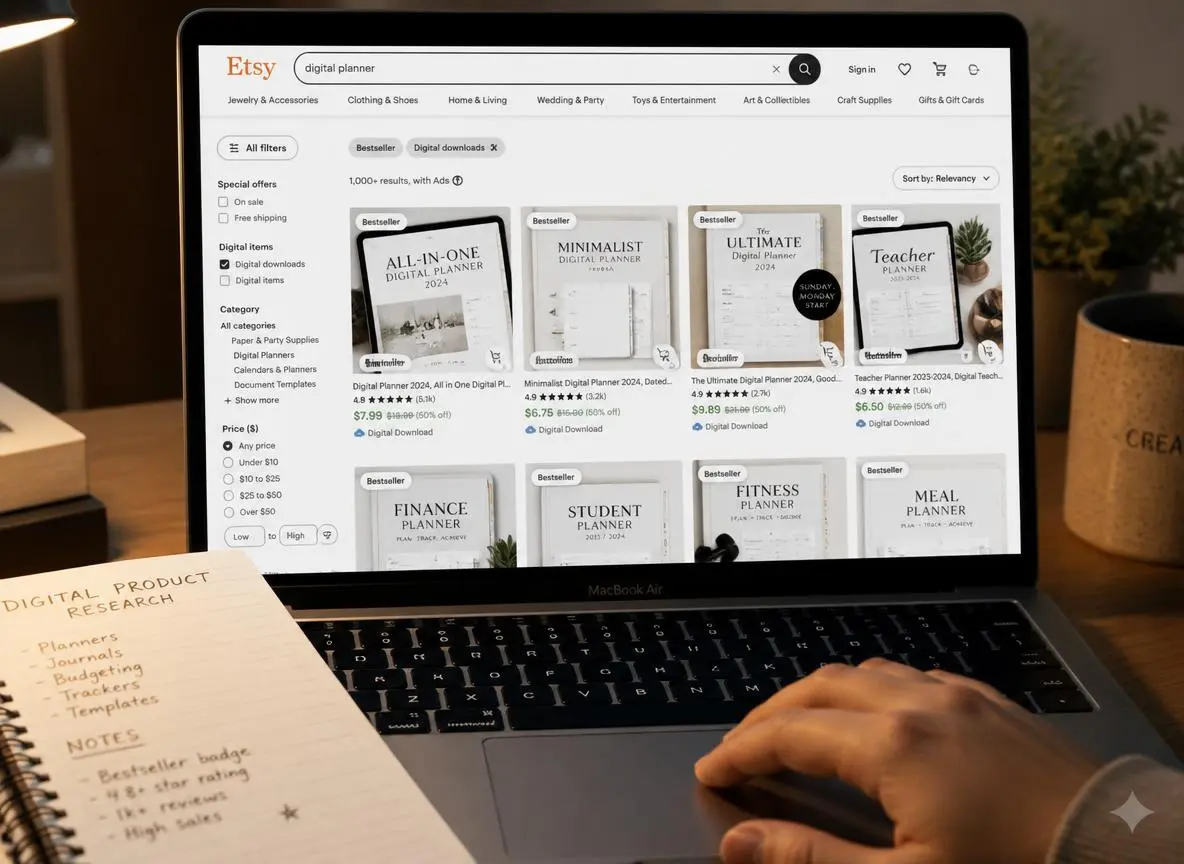
Etsy is one of the most valuable free research tools available to PLR sellers because it shows you real purchase behavior from real buyers rather than theoretical interest. The products with the most reviews in any category on Etsy are not there by accident. They are there because buyers wanted them, found them, and paid for them repeatedly.
Start your Etsy research by searching for the broad topic area you are considering and filtering results to show the highest-reviewed listings. Pay attention to which subtopics appear repeatedly in the titles of the best-selling products. If you search for personal development digital downloads and notice that morning routine planners and journal prompt packs consistently appear at the top with hundreds of reviews, that is a clear demand signal. The market is telling you exactly what it wants.
Use Amazon Bestseller Lists to Identify Content Categories People Pay For
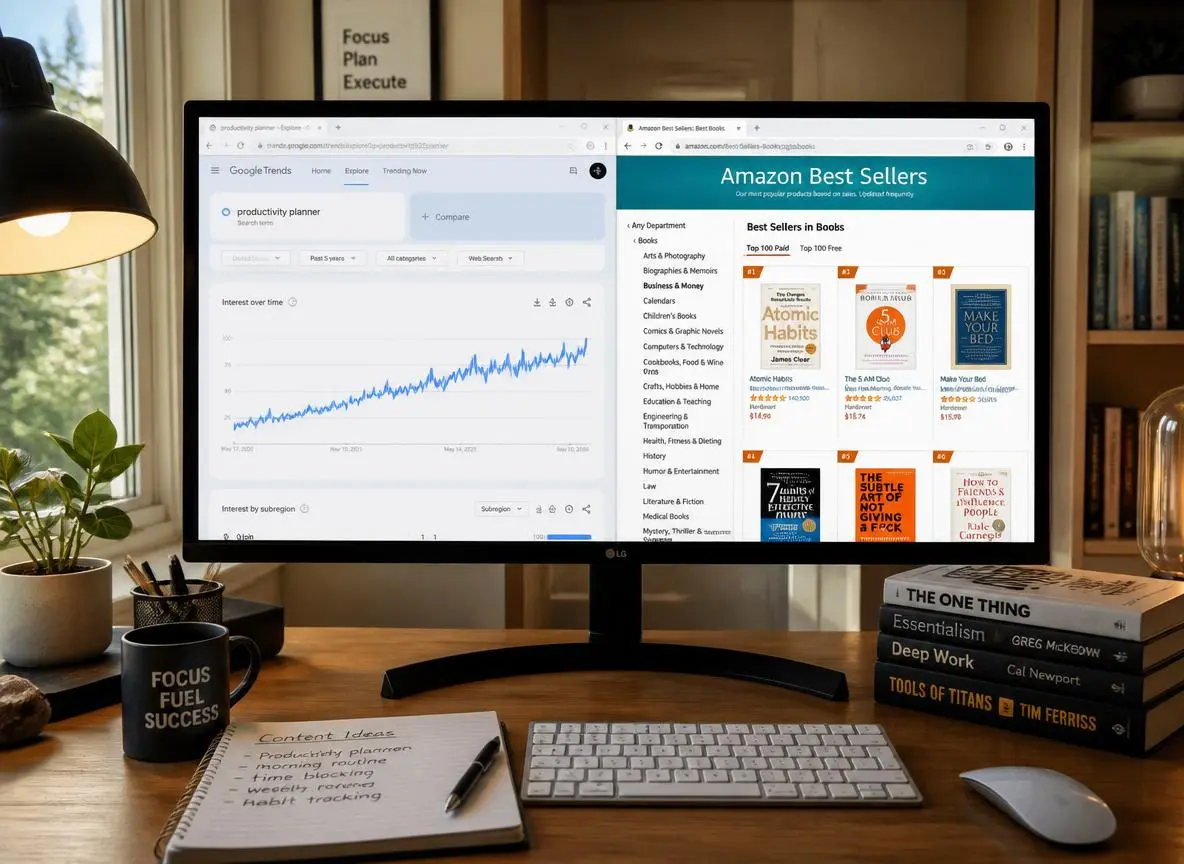
Amazon's bestseller lists are an underused research tool for PLR sellers. When a book is consistently ranking in the top twenty of a category on Amazon, there is proven reader demand for that topic in written educational format. Books and PLR content serve similar consumption patterns, which means category demand on Amazon often translates directly into digital product demand in the same topic area.
Navigate to the Amazon Books bestseller page and drill down into specific categories relevant to your niche. Look for categories where multiple books are consistently ranking well and where the books themselves are recent publications rather than decades-old classics. Recency in a bestselling category signals active and growing buyer interest. A category that consistently has fresh bestsellers is a category where buyers are actively seeking new resources — an ideal space for AI tools, affiliate marketing, and other fast-evolving topics.
Look at the book titles and subtitles in your target categories and notice the specific language and framing used. If five of the top ten books in a productivity category use the phrase system or method or framework in their titles, those are the framing words that resonate with buyers in that space. When you eventually purchase PLR content in that area, use the same outcome-oriented language in your product titles and descriptions.
Search Pinterest for Topic Momentum
Pinterest is one of the best free research platforms for identifying PLR topics that are building momentum with an engaged buyer audience. Pinterest users are overwhelmingly in a planning and aspiration mindset, which closely aligns with the buyer psychology for self-help, wellness, business, finance, and lifestyle digital products. When a topic is generating thousands of saves on Pinterest, there is an audience actively collecting information and resources in that area.
Search for your broad topic category on Pinterest and observe which specific subtopics appear most frequently in the top results. A pin that says ten habits of highly productive people with ten thousand saves tells you that productivity content framed around habits and daily routines resonates strongly with the Pinterest audience in that niche. This framing insight is directly applicable to your PLR product titles and social media promotional copy.
Use Google Trends to Validate Timing and Trajectory
Once you have identified potential topics through marketplace and social platform research, use Google Trends to validate their trajectory before committing to purchasing PLR content in that space. Google Trends shows you whether search interest in a topic is growing, stable, or declining — critical information for deciding whether a topic represents a long-term opportunity or a fading trend.
Enter your potential topic into Google Trends and look at the data over a twelve-month and five-year window. Topics showing consistent search volume over multiple years with a gradually upward trajectory are ideal candidates for PLR content investment. Topics showing a sharp spike followed by rapid decline indicate trend-based interest that is unlikely to sustain long-term product sales.
Pay particular attention to the related queries section within Google Trends. This section shows you the specific search phrases that are growing fastest within your broad topic area. These growing related queries often reveal specific subtopic angles that have not yet been saturated by competing products, giving you an opportunity to create PLR content that addresses emerging demand before the competition catches up.
Study Facebook Groups and Reddit Communities for Raw Buyer Language
The most authentic demand research available to any PLR seller is the organic conversation happening in niche communities online. Facebook groups and Reddit communities related to your target niche are full of real buyers expressing real problems in their own words. These conversations reveal what people genuinely want help with and, crucially, the exact language they use to describe their problems.
Join three to five active Facebook groups or subreddits in your target niche and spend time reading the most popular posts and comments. Pay attention to recurring questions that community members ask repeatedly. When you see the same question or problem coming up consistently in a community of real people, that is a clear signal that an educational product addressing that specific problem would find a ready and willing audience.
The language you encounter in these communities is equally valuable as the topics themselves. When real buyers describe their problems, they use vocabulary that your product titles, descriptions, and sales copy should mirror. Language alignment between your product's framing and the buyer's self-described problem is one of the most powerful conversion factors in digital product marketing — and it is completely free to research.
Practical Tips for Validating PLR Topics Before You Buy
- Cross-reference every potential topic across at least two or three different platforms before committing
- Look for topics that show strong performance in multiple formats — books, online courses, and digital downloads simultaneously
- Prioritize topics where buyers ask repeating questions in communities since these indicate perpetual demand rather than one-time curiosity
- Avoid topics dominated by a single brand or influencer since their audience may not convert to your unknown brand's product
- Check that your potential topic has room for multiple product formats including guides, planners, courses, and templates to support a growing catalog
- Validate that buyers in your topic niche are comfortable spending money by checking average product prices and sales volumes on Etsy
- Revisit your topic research every three to six months since demand patterns shift and new high-opportunity subtopics emerge regularly

Research First. Create Second. Profit Third.
The PLR sellers who build catalogs that generate consistent income are not operating on hope or habit — they are operating on data. Etsy shows you proven purchase behavior. Amazon shows you category demand. Pinterest shows you momentum. Google Trends shows you trajectory. Community research gives you raw buyer language. Use them before your next PLR purchase and experience the difference that deliberate topic selection makes.
Browse Research-Backed PLR Products →
Leave A Reply