
Why Most People Fail at Selling PLR (And Exactly How to Not Be One of Them)
Every day, hundreds of people purchase a PLR pack with genuine excitement. They upload a product, set a price, share a link — and then nothing happens. Days pass. Then weeks. They conclude that PLR does not work. Almost none of those conclusions are correct. The real reasons why most PLR sellers fail are specific, identifiable, and entirely fixable.
The mistakes covered in this guide apply whether you are selling digital products for the first time or have an existing catalog that has stalled. Every single one is correctable without exceptional skill, large investment, or starting over from scratch.

The Mindset Problem Nobody Talks About
Before getting into the tactical mistakes, it is worth addressing the fundamental mindset issue that sits underneath most PLR selling failures. The sellers who fail almost universally approach PLR as a passive income machine that will run itself once they press the upload button. The sellers who succeed approach PLR as a product business that requires the same foundational work as any other product business — just with the time-consuming content creation already done for them.
A passive income machine mindset leads sellers to upload, share once, and wait. A product business mindset leads sellers to research their market, position their product deliberately, invest in presentation quality, build a customer acquisition strategy, and iterate based on what the market tells them. The PLR foundation saves months of content creation time. It does not eliminate the need for business thinking.
This does not mean selling PLR is complicated or time-intensive. The sellers who apply business thinking to PLR consistently find that the combination of ready-made content and strategic execution is one of the highest-return models available. But the business thinking has to be there. PLR without strategy is just an expensive folder of files that never earns back its purchase price.
Choosing the Wrong Niche for the Wrong Reasons
The first tactical mistake that kills PLR businesses before they start is niche selection driven by personal interest rather than market demand. PLR sellers frequently choose niches they find personally interesting without verifying whether buyers in that niche actually purchase digital products at meaningful volume.
A niche can be fascinating, underserved, and full of passionate people who will never spend money on a digital download about it. The question is not whether a niche has an audience. The question is whether that audience has a demonstrated habit of purchasing digital products to solve problems or develop skills. The best way to verify this is to spend time on Etsy and Gumroad before purchasing any PLR, checking whether similar products exist and how many reviews they have accumulated.
The PLR niches that consistently generate revenue share a common characteristic: buyers experience a problem or desire that is specific enough to drive purchase behaviour but broad enough to attract a large pool of buyers. Health and wellness, personal finance, productivity, content marketing, and business development all meet this criterion. Hobby niches and highly specialised professional niches typically do not.
Treating the Product Listing as an Afterthought
The second most common reason PLR sellers fail is that they invest almost no effort in their product listing. The listing is the sales page. It is the only communication a buyer has with the product before making a purchase decision. A listing with a stock cover image, a generic title copied from the PLR pack, and a two-sentence description that says what the product covers rather than what the buyer will experience is a listing that will not convert — regardless of how excellent the underlying content is.
Buyers make purchase decisions based primarily on visual signals and secondarily on the description's ability to make them feel understood. A cover that looks professionally designed and communicates a clear value proposition will earn a click. A stock template cover shared by other sellers of the same PLR pack will not stand out enough to earn a click, and a listing that does not get clicked cannot generate any sales.

No Traffic Strategy Whatsoever
The third reason most PLR sellers fail is the assumption that uploading a product to a marketplace generates traffic automatically. New listings from new sellers receive minimal organic placement. Waiting for the platform algorithm to surface a new product to buyers is not a traffic strategy — it is hope, and hope is not a marketing plan.
The sellers who succeed with PLR almost always have at least one active traffic channel operating alongside their marketplace presence. This might be a Pinterest account that consistently publishes pins linking to their products, an email marketing list built using a free PLR sample as a lead magnet, or a blog targeting the search queries their potential buyers are typing. Building social media presence around the niche before launching products means every product launch has an existing audience to reach.
The most common error among sellers who attempt a traffic strategy is inconsistency. They post on Pinterest for two weeks, see no immediate sales, and stop. Traffic strategies require sustained operation before they produce compounding results. A Pinterest strategy executed consistently for six months looks completely different in terms of traffic and sales than the same strategy executed for three weeks. Most PLR sellers abandon their traffic strategy before it has had time to work.

Pricing Based on Fear Rather Than Value
Pricing anxiety is one of the most consistent failure patterns in PLR selling. Sellers who are uncertain about whether their product is good enough systematically underprice their products in ways that undermine both their revenue and their positioning. Underpricing communicates low value before a buyer reads a single word of the description.
In digital product markets, price functions as a quality signal. A buyer comparing a three-dollar productivity guide and a twenty-seven dollar productivity guide does not see two options of equivalent quality. They see a premium option and a budget option, and they make assumptions about the depth, polish, and care invested in each. The three-dollar seller wins some price-sensitive buyers and loses many quality-seeking buyers who would have paid substantially more. Use AI tools to help write product descriptions that justify premium pricing through clear, confident value communication.
The pricing sweet spots in most PLR niches sit considerably higher than new sellers assume. A well-presented PLR ebook in the productivity, wellness, or business niche can price comfortably between twenty-four and forty-seven dollars. A multi-component bundle can price between sixty-seven and ninety-seven dollars. The sellers reaching these price points are not necessarily offering dramatically better content — they are presenting it dramatically more professionally.
Giving Up After the First Product
The fifth and perhaps most universally fatal mistake in PLR selling is treating the first product as the test of whether the entire model works. New sellers frequently launch one product, watch it generate few or no sales in the first thirty to sixty days, and conclude that PLR does not work for them. This conclusion is almost always premature.
A single product in a new shop with no reviews, no traffic strategy, and no email list is operating at maximum disadvantage. Every factor that influences conversion rate is at its weakest at the beginning: no social proof, no algorithmic placement, no returning customers. The first product is not a representative test of PLR as a business model. It is the most difficult sale you will ever make.
The sellers who build sustainable PLR income describe a consistent pattern: the first few products were slow starters that gained traction as the shop accumulated reviews, as traffic channels produced consistent referral visitors, and as each new product launch benefited from the customer base built by previous products. The compounding effect of a growing product catalog, an expanding email list, and an accumulating review base is real and significant — but it requires staying in the game long enough for the compounding to begin. Building an affiliate marketing program around your products accelerates this compounding significantly.
The Specific Habits of PLR Sellers Who Actually Succeed
Understanding what the successful minority does differently is more actionable than cataloguing failures. The following patterns appear consistently among PLR sellers who build income that sustains and grows over time.
- They research before they purchase. Before spending a dollar on any PLR pack, they verify on their target platform that similar products are selling, the niche has an active buyer community, and there is room for a differentiated offering they can execute.
- They customise meaningfully before publishing. They rewrite the introduction and conclusion in their own voice, replace generic examples with niche-specific ones, redesign the interior layout to match their brand aesthetic, and write a product description that speaks directly to their target buyer's specific situation.
- They build a traffic channel before they need it. They start building their email list, Pinterest presence, or content platform before they have products to sell, so that by the time a new product launches, there is an existing audience to notify.
- They price for positioning rather than volume. They resist the impulse to undercut the market and instead invest the effort required to justify a premium price point through superior presentation, better customisation, and clearer value communication.
- They treat each product as a stepping stone. Each product they publish teaches them something about their market, builds their review count, expands their customer base, and makes the next product easier to sell. They commit to the catalog-building process rather than evaluating the entire model based on the first product's performance.
Practical Tips for Avoiding the Most Common PLR Selling Mistakes
- Verify market demand by searching your target niche on Etsy and filtering by bestseller before purchasing any PLR pack
- Write your product description as if you are speaking directly to one specific person in one specific situation rather than describing the product to a general audience
- Invest at least two hours customising every PLR product before publishing, with most of that time going to the introduction, description, and cover design
- Set your price by researching the top ten selling products in your niche and positioning yourself in the upper third of that range rather than the lower third
- Build an email list from day one using a free sample page or condensed version of your PLR content as the lead magnet
- Commit to publishing at least five products before drawing any conclusions about whether the PLR model is working for you
- Create a simple content calendar for your primary traffic channel and execute it for at least ninety days before evaluating its effectiveness
- Ask every buyer who leaves a review to share what specific problem the product solved for them and use that language in future listing descriptions
- Build complementary products that serve the same buyer at different price points, creating natural upsell paths within your shop
- Keep a spreadsheet tracking which products are getting views versus purchases so you can diagnose whether you have a traffic problem or a conversion problem
Give Yourself a Real Chance to Succeed
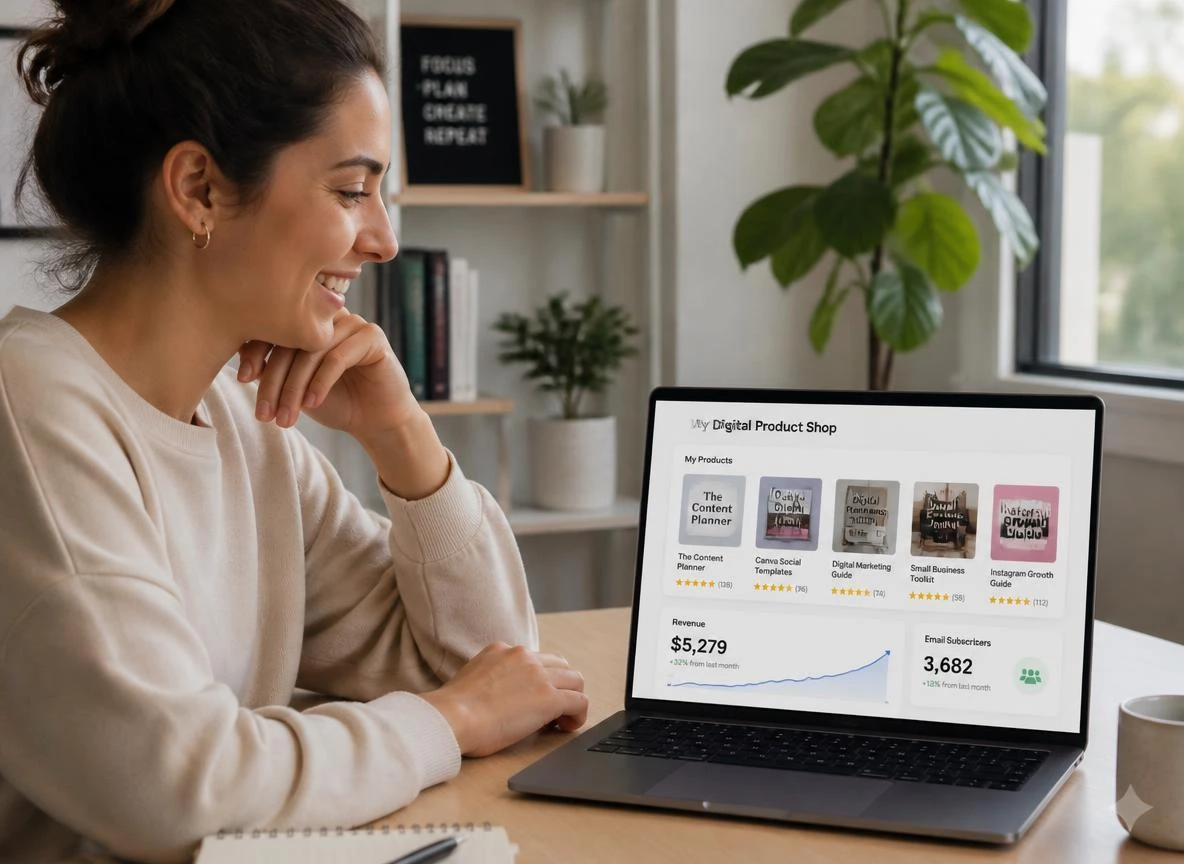
Most PLR sellers fail not because PLR is a flawed model but because they never gave themselves a real chance to succeed. Every mistake in this guide is correctable. It requires only the willingness to approach PLR as a real product business and to do the foundational work that any real product business requires. Start with one product, do it right, and let the compounding begin.
Browse PLR Products to Start With →
Leave A Reply